Korean learning structure in this app
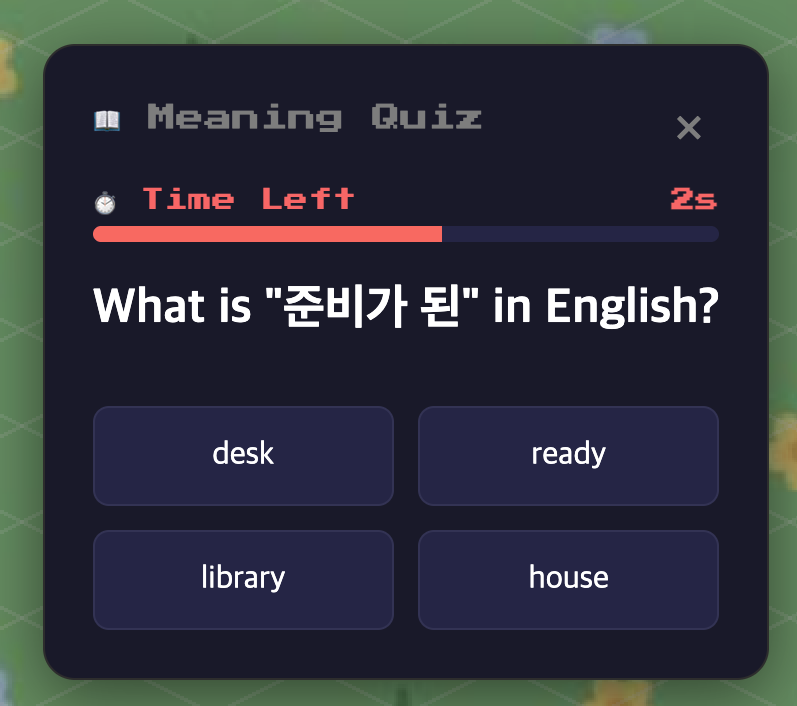
Korean learning here follows the same retention-first architecture as the English track: short quiz rounds, immediate feedback, and periodic review resurfacing. The goal is not one-time memorization. The goal is to move frequently used words into stable recall through repeated contact at the right interval.
This matters because Korean learners often face two failures: trying to learn too many words too quickly, or pausing for long periods after intense sessions. A quiz rhythm-based model reduces both risks. You keep continuity on busy days and still accumulate progress over weeks.
Practical routine for global learners
- Start with beginner deck and keep session length below 10 minutes for one week.
- Prioritize review cards and avoid adding too many new terms in the same session.
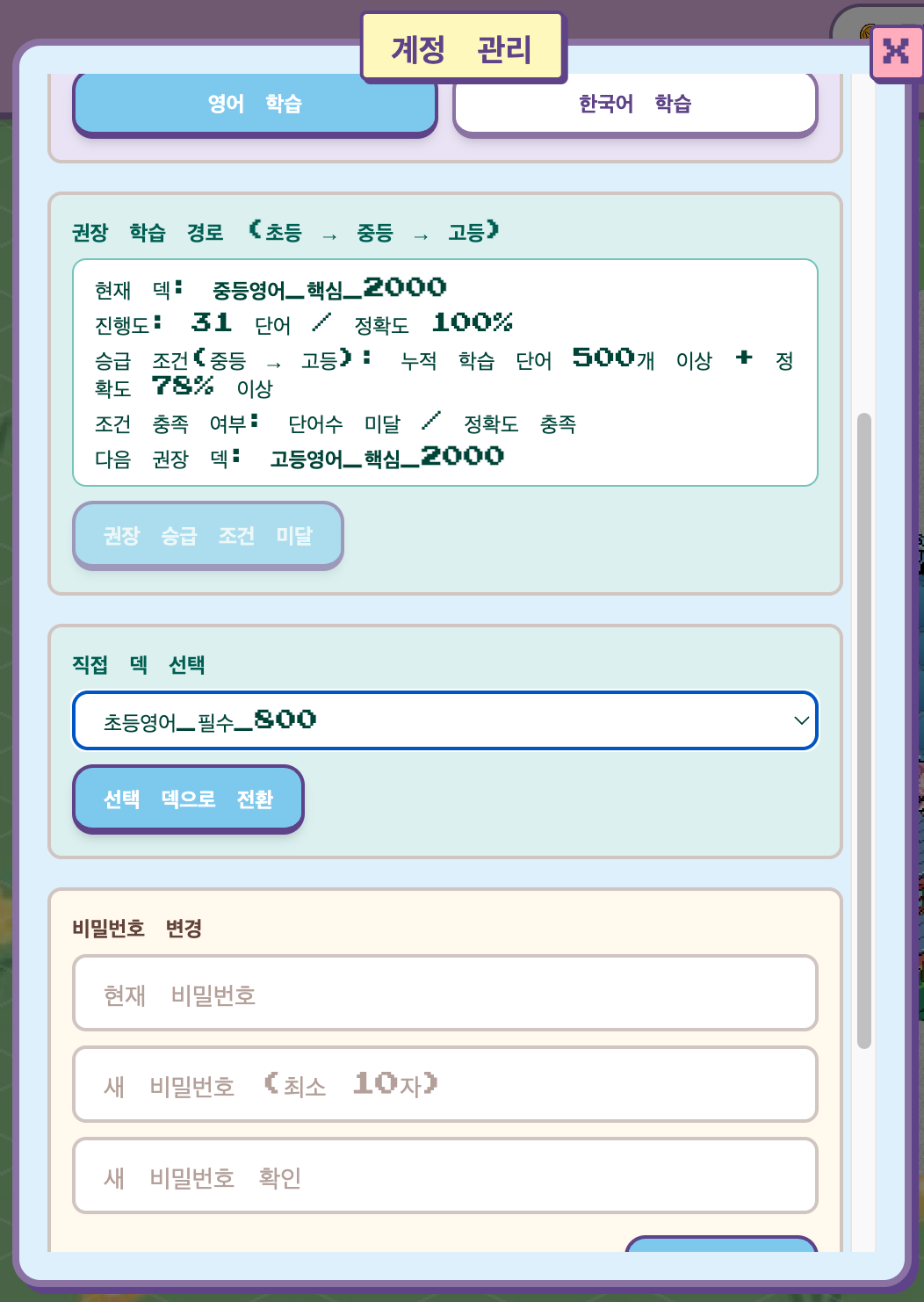
- Use account profile settings to maintain the right language direction and deck scope.
- Only step up to intermediate after stable completion and strong review accuracy.
If your accuracy drops after a level-up, that is normal. Step down one level temporarily, recover rhythm, then try again with smaller daily volume.
Learning controls and examples
Use the account modal to track recommended route, promotion requirements, and deck switching. Combine this with review-focused quiz flow to improve retention without fatigue spikes.
FAQ
Is this good for complete beginners in Korean?
Yes. Start with the beginner deck and short sessions. The system helps you repeat core vocabulary before scaling difficulty.
Do I need to study grammar first?
Basic grammar helps, but you can begin with vocabulary quizzes immediately and build grammar understanding in parallel.
How do I keep Korean study consistent?
Use daily micro-sessions, finish due reviews first, and treat quests as consistency triggers rather than speed goals.
Can I switch between English and Korean learning paths?
Yes. Account profiles support language-path switching so progress can be managed by learning objective.
What should I do if Korean pronunciation feels difficult?
Keep session length short, repeat weak terms with TTS support, and prioritize high-frequency words before rare vocabulary.