2026-04-02 · 7 min read
Before the change
I studied in long bursts and then skipped several days. On paper, my study hours looked decent, but the pattern was unstable. I would do a 40-minute session on Sunday, feel accomplished, and then skip Monday through Thursday.
Each restart felt harder than the last one. Not because the material was different, but because the gap destroyed my review rhythm and I kept relearning words I had already seen. The frustration compounded until I considered quitting entirely.
Why long sessions were the problem
Long sessions created a psychological barrier. Every time I sat down, I felt like I needed at least 30 minutes to make the session worthwhile. On days when I had only 10 minutes, I chose to skip instead of adapting.
This all-or-nothing mindset is common among language learners. The irony is that the learner who studies 5 minutes daily for a month outperforms the one who does two 3-hour marathon sessions, because consistency drives memory consolidation.
What changed
I committed to one five-minute quiz session per day, no matter what. The rule was simple: open the app, do one quiz round, process due reviews, and stop. No minimum word count, no accuracy target, just one round completed.
This removed negotiation and turned studying into a default behavior. I stopped asking "do I have time?" because the answer was always yes. Five minutes fits into any schedule, even the worst days.
Results after four weeks
Completion became automatic. I finished 26 out of 28 days in the first month. Accuracy improved gradually without extra pressure because the review system had consistent data to optimize intervals.
Most importantly, I stopped quitting after busy days. Previously, missing one day triggered a spiral. Now, even if I missed a day, the next session was easy enough to restart without guilt or catch-up anxiety.
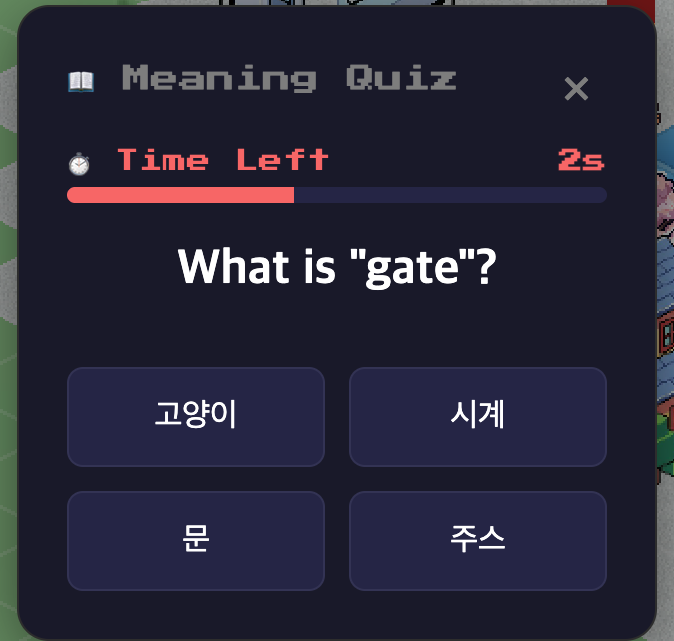
Unexpected benefit: willingness to return
Because sessions were short, I was willing to return even when tired. After a long work day, a 5-minute quiz felt like a small win rather than a chore. That emotional difference matters more than people realize.
That repeatability built confidence faster than occasional long sessions. Each completed day reinforced the identity of "someone who studies daily," and that identity became self-reinforcing over time.
What I do now (three months later)
I still use five minutes as my baseline and add extra only when I feel good. On weekdays, most sessions are exactly five minutes. On weekends, I sometimes extend to 15 minutes because I genuinely enjoy the quiz flow by now.
The baseline protects continuity while the extras accelerate growth. This two-layer approach keeps the habit safe while allowing natural expansion when energy is available.
Takeaway for beginners
Start smaller than you think. If 5 minutes feels too much at first, start with 3 minutes. The exact duration matters less than the daily repetition it enables.
Protect repetition first, intensity second. Once daily sessions become automatic, performance gains follow naturally because the review system can finally do its job with consistent input data.
The biggest mistake is optimizing for session quality before session frequency. Get the frequency right, and quality will improve on its own.