2026-03-18 · 4 min read
Missed words are the real signal
Wrong answers are not failure. They are a precise map of what to review next. Every missed word tells the system where your memory is weakest, and that data drives smarter review scheduling.
Use short, repeated exposure to weak words instead of adding too many new items at once. New words are exciting, but weak words are where memory is actually built. Prioritize correction over expansion.
Why most review plans fail
The most common failure pattern is treating review as an afterthought. Learners pile up new words and then feel overwhelmed when the review queue grows too large to manage in one session.
Another failure mode is marathon review on weekends to compensate for skipped weekdays. This creates short-term relief but does not build durable memory because spacing intervals are destroyed.
A third pattern is abandoning review entirely when accuracy drops. Instead, that drop is exactly when review matters most, because struggling recall strengthens the memory trace.
Minimum viable review
On busy days, do only due reviews and skip new words entirely. This single decision protects long-term retention and prevents review debt from accumulating.
A small daily review loop is stronger than occasional review marathons. Think of each session as watering a plant: small, regular amounts work far better than occasional flooding.
Building a 3-step review loop
Step one: open the game and process all due review cards first. Do not touch new words until the due queue is empty or manageable.
Step two: after clearing reviews, add a small batch of new words only if time and energy remain. Five to ten new words per session is a safe starting point.
Step three: end the session cleanly. Do not keep adding words because you feel good. Tomorrow needs a manageable queue, and today's restraint ensures that.
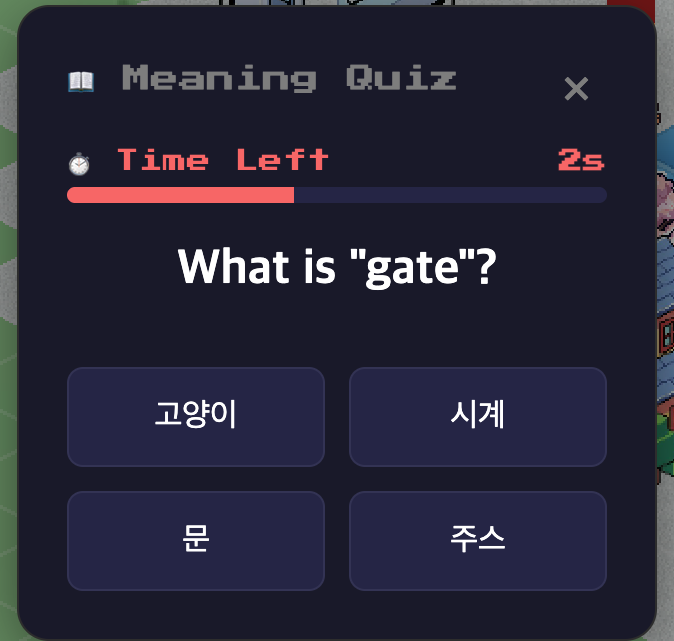
How spaced review works behind the scenes
When you answer a review card correctly, the system extends the interval before it appears again. When you answer incorrectly, the interval shortens. Over time, stable words fade into long intervals while weak words stay in frequent rotation.
This means your daily queue is always a mix of easy confirmations and challenging recalls. That mix is intentional: easy cards maintain breadth while hard cards build depth.
Action plan for this week
For seven days, start every session with due reviews only. Track two numbers: days completed and review accuracy percentage.
If accuracy stays above 70 percent and you complete every day, you have a working review loop. From there, gradually add new words while keeping the review-first rule intact.